• Who is the competitive supplier of Cellulose Acetate Butyrate (CAB-381-2) ?
    Who is the competitive supplier of Cellulose Acetate Butyrate (CAB-381-2) ? Oct 11, 2024
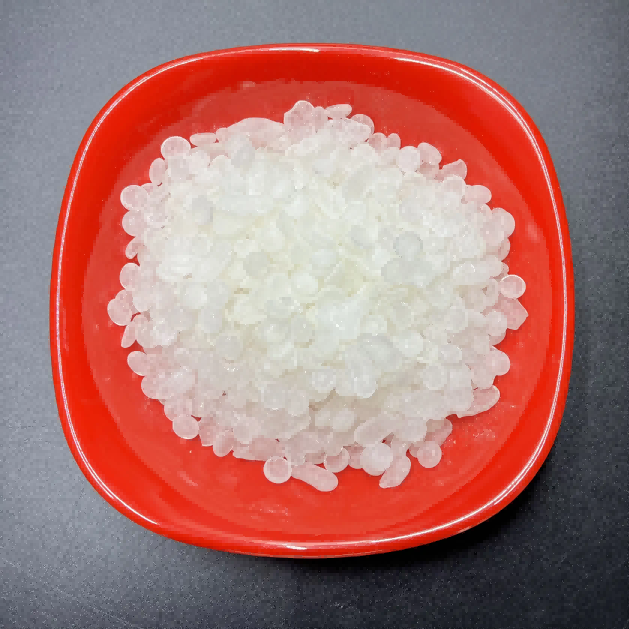
    CAB-381-2 is a high butyryl cellulose ester with high viscosity. Other than a higher viscosity and molecular weight, this cellulose ester shares the same general characteristics as CAB-381-0.1,CAB-381-0.5,CAB-381-2 offers a combination of solubility and compatibility, moisture resistance,excellent surface hardness and good film strength.It is supplied as a dry,free flowing powder. As we know due to CAB-381-2's outstanding performance, it is widely used in Automotive OEM, Coating, Automotive Plastic Coating, Plastic Coating, Textile Coating, Wood Paint, Leather Coating, Nail Polish Care, Paper Paint, Heat Seal Adhesive, Truck/Bus/Commercial Vehicle Paint. While considering the very limited supplier of high quality Cellulose Acetate Butyrate, CAB-381-2 is aways very expensive, many automotive paint, ink, wood coating, even some naii plish factories are facing increasing production cost. People are always trying to find competitive suppliers of Cellulose Acetate Butyrate, CAB 381 and CAB 551 series. So, who is the competitive supplier of Cellulose Acetate Butyrate (CAB-381-2)? I am pleased to inform you that Kabasph (China) Material Technology is one of them. Kabasph Material Technology is a professional company engaged in R&D and application of functional resins and additives for high performance paint, ink, powder coating. And its CAB-381-2 is famous for high performance, stable quality, competitive price, which is widely used by customers of automotive paint, wood coating, ink,nail polish and so on. For more details, please contact us at Mobile/WhatsApp: +86 18651865975.
  • How to choose high-quality Ink Grade Talc Powder?
    How to choose high-quality Ink Grade Talc Powder? May 07, 2025
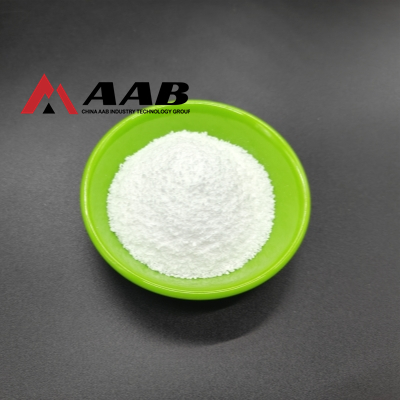
    Talc powder is widely used in different grades of ink products. The product has excellent color performance and can reduce the usage of titanium dioxide. Ultra-fine talcum powder is used in ink products without secondary grinding, which also can improve the friction resistance and fluidity of the ink, while reducing the viscosity.   Product features:  Talcum powder has the characteristics of increasing tensile strength, shear strength, flexural strength, compressive strength, reducing deformation, elongation, High whiteness, uniform particle size and strong dispersion. Our products do not contain asbestos.   Recommended adding amount: Coatings and paints 5%-40% Ink, rubber, paper making 5%-15% Textile, feed 5%-15% Plastic, cable 5%-25% The recommended dosage is for reference only, and the specific dosage will be determined by the customer after the test.   Application:
  • Conquering the Corrosion Challenge in the Blue Territory: China AAB Industry Technology Group’s Cutting-Edge Marine Anticorrosion Solutions
    Conquering the Corrosion Challenge in the Blue Territory: China AAB Industry Technology Group’s Cutting-Edge Marine Anticorrosion Solutions Jun 16, 2025
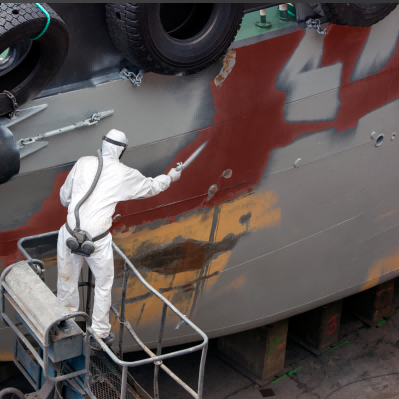
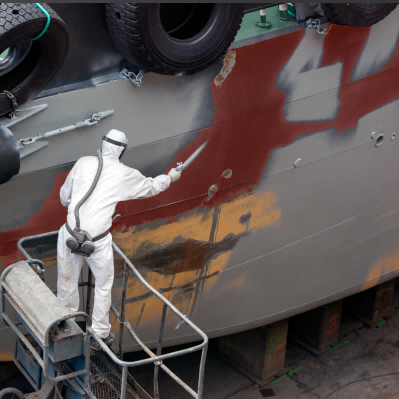
    The ocean holds great economic potential, but its harsh environment - high salinity, high humidity, microbial erosion, and wave impact - is constantly testing the durability of offshore infrastructure. Corrosion is one of the most severe and costly challenges facing the marine engineering field. From offshore wind power platforms, port terminals, oil and gas facilities to ships and cross-sea bridges, the invasion of corrosion not only causes huge economic losses, but also directly threatens structural safety and operational continuity. At  AAB Industry Group, we are well aware of these challenges and are committed to providing a full range of marine anti-corrosion solutions that exceed industry standards to ensure that your offshore assets remain new in the blue territory.   Understand the complexity of marine corrosion: Corrosion in the marine environment is diverse and complex. The following highlights several key corrosion zones and mechanisms: ·Splash Zone: Alternating dry and wet, with sufficient oxygen, is the area with the fastest corrosion rate. ·Submerged Zone: Long-term immersion in seawater, facing uniform corrosion, pitting corrosion, and local corrosion caused by the attachment of marine organisms. ·Tidal Zone: Periodic submergence and exposure, extremely harsh corrosion environment. ·Marine Atmosphere: Salt spray and high humidity cause continuous corrosion on metal surfaces. ·Microbiological Influence Corrosion (MIC): The activity of specific microorganisms accelerates the destruction of metal materials. ·Galvanic Corrosion: Accelerated corrosion caused by potential difference when different metal materials are connected.   The interaction of these factors makes marine corrosion prevention by no means an easy task, which requires systematic scientific design, high-performance materials and exquisite construction technology.   China AAB Industry Technology Group: Your trusted marine anti-corrosion guard Faced with such complex challenges, China AAB Industry Technology Group provides customized marine anti-corrosion protection with its deep technical accumulation, innovative products and professional engineering services. We provide a series of rigorously tested and verified high-performance marine anti-corrosion coating raw materials designed for harsh environments, such as fillers, additives, pigments, antifouling agents, etc. Our products have the following characteristics: ·Extraordinary weather resistance and UV resistance: Effectively resist salt spray, moisture and strong sunlight in the marine atmosphere. ·Excellent adhesion and flexibility: Even when the metal expands and contracts or the structure is slightly deformed, it can remain intact to prevent cracking and peeling. ·Extremely low water permeability and air permeability: Form a dense barrier to block the penetration of corrosive media. ·Excellent wear and impact resistance: Resist physical damage such as waves, floating ice, equipment collision, etc. ·Long-term anti-corrosion life: Under strict construction conditions, the design life can reach more than 15 years, significantly reducing maintenance frequency and total cost. ·Customized solutions: We carefully design the optimal coating system (primer, intermediate paint, topcoat) according to the specific environment of the structure (such as splash zone, full immersion zone, atmospheric zone), substrate type (steel, concrete, etc.) and service requirements.   The corrosion power of the ocean should not be underestimated, but it is by no means invincible. Choosing China AAB Industry Technology Group as your partner means choosing scientific, reliable and long-term protection. We not only provide top products and technologies, but also provide professional services and commitments throughout the entire cycle of project design, construction, and operation and maintenance. Let us work together to build an indestructible line of defense for your marine assets with innovative solutions, conquer corrosion challenges, and unleash the unlimited potential of the blue economy.     Take action now: Visit our website China AAB industry technology group to learn more about our marine anti-corrosion solutions and technical information. Contact our anti-corrosion experts for free consultation and customized solution recommendations for your specific project. Let our AAB's professional strength protect your offshore investment! Mr.Bruce Tel: +86 13951823978(Whatsapp) Mail:info@aabindustrygroup.com  
  • AAB launches safe benzene-free resin A-81NB to revolutionize nail polish formula
    AAB launches safe benzene-free resin A-81NB to revolutionize nail polish formula Jun 25, 2025
    Recently, China AAB Group, a leading global chemical supplier, has launched new products: Aldehyde Resin A-81NB. This resin specially designed for the formula of nail polish, with benzene free as its core safety commitment, is committed to providing safer, high-performance and shiny solutions for the nail industry to meet consumers' dual pursuit of health and beauty.   Aldehyde resin A-81NB is a modified Aldehyde Resin launched by China AAB Group. It aims at the limitations of traditional nail polish resins (such as nitrocellulose) in gloss, drying speed, flexibility and pigment dispersion, and makes breakthrough optimization.   The most significant advantage is that it completely does not contain substances such as benzene, toluene, xylene, etc., which meets the increasingly stringent global cosmetic safety regulations (such as the EU Cosmetic Regulation (EC) No 1223/2009, China's "Technical Specification for Cosmetic Safety", etc.), providing formula designers and factories with peace of mind.   Features and advantages Excellent safety: l Benzene-free: Completely avoid the health risks brought by benzene solvents, and the formula is safer. l Low odor: Helps to reduce the overall odor of nail polish and enhance the user experience. l Compliance with regulations: Meet the safety requirements of the global mainstream market for cosmetic raw materials. Top gloss and transparency: l Give nail polish a mirror-like high gloss and excellent transparency, making the color more vivid, full and deep. l Significantly improve the texture and luxury of nail polish after film formation. Quick drying: l Excellent solvent release, promotes rapid surface drying of nail polish, shortens waiting time, and reduces the risk of scratching. Excellent film-forming and flexibility: l The formed paint film is hard and wear-resistant, while maintaining a certain degree of flexibility, not easy to crack or peel off, and lasting and bright. Excellent pigment wetting and dispersibility: l It can effectively wet and disperse various pigments and effect particles (such as pearl powder, sequins), ensure uniform and stable color, avoid precipitation, and improve the storage stability and use effect of the product. Wide compatibility: l It has good compatibility with commonly used solvents in nail polish systems (such as ethyl acetate, butyl acetate, ethanol), plasticizers (such as phthalate substitutes), nitrocellulose and other resins, and has high formulation flexibility.   Application Areas Aldehyde Resin A-81NB is an ideal choice for improving the performance of various nail polishes: l Top gloss/top coat: Provides high gloss, high hardness, quick drying and protection. l Colored nail polish: Enhances color saturation, gloss, fluidity and uniformity, and improves the application experience. l Base coat: Improves adhesion and smoothness (depending on the specific formula design). l Special effect nail polish: Such as pearlescent, metallic, and sequined nail polish, providing excellent dispersion and gloss carrying capacity. Why choose our Aldehyde Resin A-81NB? With consumers' increasing health awareness and increasingly stringent regulations, Aldehyde Resin A-81NB provides key solutions for nail polish manufacturers: l Safety upgrade: Benzene-free formula responds to the market's strong demand for safer products. l Excellent performance: Significantly improves the gloss, drying speed, durability and color expression of nail polish. l Formulation-friendly: Good compatibility and dispersibility simplify the formulation development process. l Compliance guarantee: Meet the regulatory requirements of major global markets and reduce market access risks.   About China AAB Group China AAB Group is a global company focusing on the research, development, production and sales of high-performance specialty chemicals. We are committed to providing innovative, sustainable and high-quality solutions for industries such as coatings, inks, adhesives, cosmetics and personal care. The launch of Aldehyde Resin A-81NB demonstrates our firm commitment to continuously promote industry progress and meet customer needs.Please feel free to contact us if you need any technical documents or free samples.  
  • How to Choose the Right Coating Additive for Your Industry
    How to Choose the Right Coating Additive for Your Industry Jun 27, 2025
    Coating additives are an important component of coating formulations. Although their dosage is usually small (0.1%~5%), they have a significant impact on the storage stability, application performance, film-forming effect, and final film properties of coatings.The selection principle of additives for coatings: high efficiency, minimal negative impact, high cost-effectiveness, and compliance with environmental requirements.The following is the selection method and key considerations for coating additives.     1. Main categories and functions of coating additives Classification Function Example Dispersant Improve pigment dispersibility, prevent sedimentation and flocculation Polyacrylate and Phosphate Esters Wetting Agent Reduce surface tension and improve substrate wettability Organic Silicon and Alkynediol Defoamer Restrain the production of foam and reduce coating defects Mineral Oils; Organic Silicon Leveling Agent Improve coating leveling and reduce orange peel and brush marks Acrylic Ester and Organosilicon Thickener Adjust the viscosity of the coating to prevent sagging and settling Cellulose Ether, Polyurethane, Bentonite Anti-Settling Agent Prevent pigment settling and improve storage stability Gas Phase Silica, Polyamide Wax Cure Accelerator Accelerate coating curing and improve reaction efficiency Organic Tin, Amine Cure Accelerator Prevent UV degradation and improve weather resistance UV Absorbers, Hals Fungicide Inhibit mold growth and extend coating life Isothiazolinones, Benzimidazoles Adhesion Promoter Improve the adhesion between the coating and the substrate Silane coupling agent, epoxy phosphate ester   2. Key factors in additive selection (1) Coating system (water-based/solvent-based/UV curing) l Water-based coatings: water-soluble or water-dispersible additives (such as BYK-190 dispersant, Tego Wet 270 wetting agent) must be selected. l Solvent-based coatings: oil-soluble additives (such as BYK-161 leveling agent, BYK-011 defoamer) must be selected. l UV curing coatings: photoinitiator-compatible additives (such as Tego Rad 2100 leveling agent) must be selected. (2) Coating type (primer/topcoat/clear coat/colored paint) l Primer: Focus on adhesion promoters and rust inhibitors (such as zinc phosphate). l Topcoat: Key considerations include leveling agents, matting agents (such as silica matting powder), and weather resistant additives. l Color paint: water-based paint dispersant, anti settling agent. (3) Construction method (spray coating/brush coating/roller coating) l Spray coating: Low foaming additives and leveling agents are required. l Brush coating/roller coating: anti sagging agents and anti splash agents are required.   3.Environmental and performance requirements Demand Recommended Additives Weatherability Uv Absorbent+Hals High Gloss Leveling Agent+Defoamer Matte/Frosted Matte Powder+Anti Settling Agent Anti-Bacteria   Mold Inhibitor+Algae Inhibitor High Adhesion Epoxy Phosphate Ester+Silane Coupling Agent   4.Verify long-term stability Perform accelerated aging testing (such as storing at 40 degrees for 30 days) to observe whether: l Settlement (adjust anti settling agent) l Viscosity change (adjusting thickener) l Decreased defoaming performance (hydrolysis of defoamers)   5.Common problems and solutions Common Problem Possibility Analysis Solution Ideas Shrinkage Of Coating Film Incompatible Leveling Or Defoaming Agents Replace With Compatible Additives Pigment Sedimentation Insufficient Dispersant/Anti Settling Agent Add Anti Settling Agent Poor Leveling Performance Improper Selection Of Leveling Agent Switching To Organic Silicon Leveling Agent Too Much Foam Wetting Agents Have Strong Foaming Properties Adjust Defoamer Poor Adhesion Insufficient Wetting Of The Substrate Add Adhesion Agent   6.General selection ideas   The material determines the performance, and the reasonable selection of additives can significantly improve the application defects of coatings. It is recommended to optimize the formula through small-scale experiments and pay attention to the synergistic effect between additives. Only by applying them correctly can they be fully utilized.   China AAB Industry Technology Group offers a comprehensive portfolio of additives and polymers, as well as detailed one-to-one customer service to meet specific needs. Our main functional additive products include: wetting and dispersing agents, defoamers and air release agents, wetting and leveling agents, tackifiers and coupling agents, wax additives, rheological additives, high-performance HAA curing agents, TIGC curing agents, GMA resins, matting agents, functional leveling agents, texture agents, charge additives, dispersants, leveling agents and epoxy curing agents, pigment dispersants, flow and wetting modifiers, anti-yellowing agents, adhesion additives, etc. Our Kabasph® additive products are widely used in automotive coatings, refinishing paints, marine coatings, anti-corrosion coatings, wood coatings, inks, epoxy floor paints, powder coatings, UV gel nail polish, textiles, rubber, architectural coatings, papermaking, etc. Plastics, skin care products, cosmetics, etc.   If you need any technical support or free samples,please feel free to contact us: Tel: +86 13951823978 (WhatsApp, Telegram) Email: info@aabindustrygroup.com

  • How the Merrill–Crowe Process Redefines Gold Recovery Efficiency?
    How the Merrill–Crowe Process Redefines Gold Recovery Efficiency? Jul 09, 2026
    In the field of gold mining and metallurgy, how to efficiently and cost-effectively "capture" gold and silver from cyanide solutions is the core factor that determines the overall profitability of a project. Among the various gold recovery methods, the Merrill–Crowe process stands out for its exceptionally high precipitation efficiency and mature industrial application, remaining the preferred choice for large-scale gold and silver mines worldwide.   This article takes you through the chemical principles of the Merrill–Crowe process and explains why high-purity zinc dust is the undisputed "heart" of this flowsheet.    What Is the Merrill–Crowe Process? In simple terms, the Merrill–Crowe process is a hydrometallurgical method that uses zinc dust cementation to precipitate precious metals (gold and silver) from alkaline cyanide solutions. Invented in the late 19th century by Charles Washington Merrill and Thomas B. Crowe, this process has stood the test of time for over a century, thanks to its stable operation and high recovery rates.   The basic flowsheet consists of the following key steps: 1. Clarification of Pregnant Solution: The gold-bearing solution (pregnant solution) from the leaching circuit is passed through filtration equipment to remove suspended solids, ensuring a clear solution.   2. Vacuum Deoxygenation: This is a critical step! Dissolved oxygen consumes zinc dust and reduces precipitation efficiency. Therefore, the solution must be deoxygenated in a vacuum deaerating tower.   3. Zinc Dust Addition and Cementation: High-purity zinc dust is precisely metered into the deoxygenated pregnant solution to initiate the displacement reaction.   4. Pressure Filtration and Recovery: The mixture containing gold and silver precipitates enters a plate-and-frame filter press, producing a high-grade gold sludge, which is then sent for refining.   The Core Chemistry: How Does Zinc Dust "Capture" Gold? The chemical foundation of the Merrill–Crowe process is an electrochemical displacement reaction. Because zinc is more reactive (more negative electrode potential) than gold and silver, zinc dust loses electrons to become zinc ions (Zn²⁺), while gold ions (Au⁺) or silver ions (Ag⁺) in the solution gain electrons and are reduced to metallic form, precipitating onto the zinc particles.   Main reaction equation (using gold as an example):Zn + 2NaAu(CN)₂ → Na₂Zn(CN)₄ + 2Au↓   However, actual production is not always this ideal. If zinc dust is of insufficient purity or has uneven particle size, side reactions (such as zinc reacting with water to produce hydrogen gas) can occur. This leads to a sharp increase in zinc consumption and may form colloidal substances that are difficult to filter.   The Key to Process Success: High-Performance Zinc Dust In the Merrill–Crowe flowsheet, the quality of zinc dust directly determines precious metal recovery rates, filtration efficiency, and overall operating costs. Not all zinc dust is suitable for this application. Zinc dust specifically engineered for this demanding process must possess the following characteristics:   1. High Purity (≥99% Total Zinc) Impurities—especially lead, iron, and cadmium—can create micro-galvanic cells on the zinc particle surface, increasing unnecessary zinc consumption. More importantly, low impurity content ensures a clean cementation reaction, preventing contaminants from interfering with subsequent gold sludge refining.   2. Consistent Particle Size Distribution (e.g., 325 Mesh Grade) Particles that are too large have low specific surface area, resulting in slow reaction rates and incomplete gold precipitation. Particles that are too fine, while reactive, tend to clog filter cloths and reduce filter press efficiency. A stable particle size distribution (e.g., 95% passing through a 45-micron sieve) is the key to balancing reaction kinetics and solid-liquid separation performance.   3. High Specific Surface Area and Reactivity Zinc dust produced via specialized atomization or distillation-condensation processes features a thin surface oxide layer and a porous microstructure. This morphology imparts high surface activity, significantly accelerating the kinetics of gold precipitation and ensuring complete precious metal recovery within a very short residence time.   4. Excellent Flowability In large-scale industrial automated dosing systems, the flowability of zinc dust determines the stability and accuracy of feed rates. Poor-flowing powders tend to bridge or clog feeding equipment, causing fluctuations in zinc addition and compromising recovery stability.   Technical Data Interpretation Taking the industry-leading AAB Group ZP 325G high-purity zinc dust as an example, its technical specifications tailored for the Merrill–Crowe process demonstrate the benchmark for quality zinc dust: Metallic Zinc ≥96.0%: High active content ensures strong displacement driving force. Residue on 45µm Sieve ≤0.05%: Strict compliance with the 325-mesh standard ensures neither gold loss nor filter cloth blockage. Lead, Iron, and Cadmium Content All ≤0.01%: Ultra-low impurity levels are the guarantee for producing high-purity gold sludge and simplifying the refining process.   If you are operating a Merrill–Crowe gold recovery circuit, now is the time to evaluate the quality and performance of your zinc dust. A small upgrade in reagent selection can deliver substantial gains in precious metal recovery, process stability, and operational profitability—making high-performance zinc dust one of the most cost-effective investments in your entire refining process.
1 2 3

A total of3pages

Corporate Culture

Persisting on the operation concept of "Pursue honesty and quality at the same time, win hearts and profits together", the China AAB group’s people insist on the enterprise spirit of “environmental-friendly and continuous innovation, and dedicates service to all followers and customers around the world.” we have become long-term stable suppliers for many paint giants in the Europe, North American, the Middle East, Southeast Asia, Japan, South Korea and other countries and regions.
Read more
homepage

Need Help? Chat with us

Leave A Message
If you are interested in our products and want to know more details,please leave a message here,we will reply you as soon as we can.
Submit
Contact us #
+86 13951823978

home

products

whatsApp

Contact Us

Need Help? Chat with us

Start a Conversation

Hi! Click one of our members below to chat on